


A Conversation About the Thinking Behind Ground Work: Building Real Businesses Across Borders
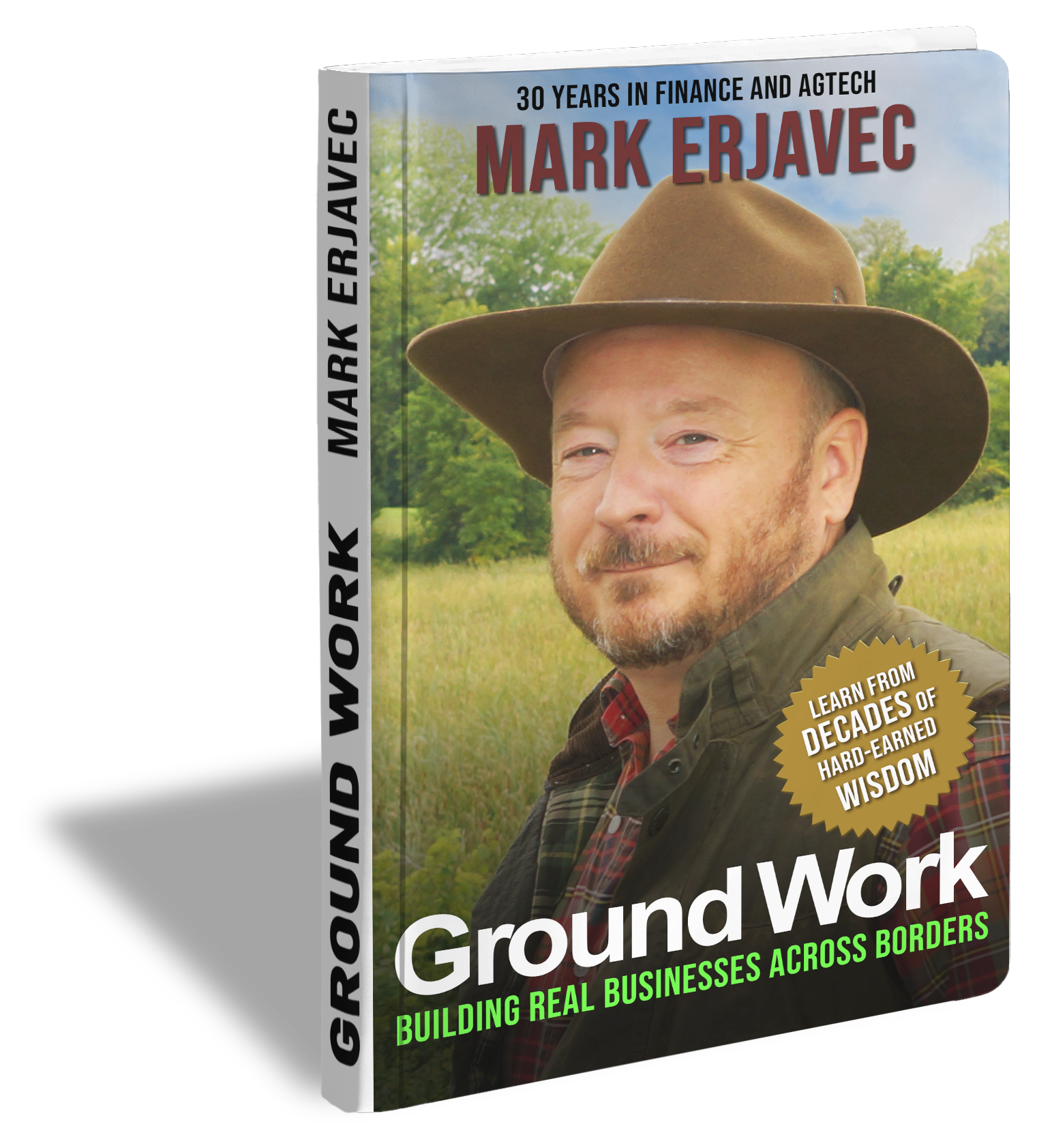
Entrepreneur Mark Erjavec is preparing to release his new digital book, Ground Work: Building Real Businesses Across Borders. Below is a long-form Q&A designed for readers who want to understand the ideas, mindset, and principles behind the book — without diving into sensitive details or behind-the-scenes material.
This conversation-style format gives visitors to the site a clearer sense of who Mark Erjavec is, how he thinks, and what the book represents.
What motivated you to write Ground Work?
Mark Erjavec:
The business world is full of theory and hype. My career never came from any of that. It came from structure, discipline, and understanding how systems behave under pressure. Ground Work isn’t trying to be dramatic — it’s just a record of the patterns that kept repeating across industries and across continents.
What is the book actually about?
It’s a high-level look at thirty years of operating in different sectors. Not a memoir, not a technical manual.
It focuses on the overarching principles that guided Mark Erjavec through consumer finance, distressed assets, real estate lending, agriculture, aviation, and international operations:
• how real systems behave in the field
• how operators refine judgment over long cycles
• why structure drives stability
• how patterns repeat even in unrelated industries
Everything is kept intentionally conceptual.
Why did you choose not to reveal detailed case studies?
Mark Erjavec:
Because the specifics change, but the logic stays the same. If I documented every deal, it would turn into a technical archive that only applies to one moment in time. The point of the book is to highlight the thinking — the principles that carry over whether you’re in finance, agriculture, aviation, or a foreign jurisdiction.
How do your early experiences show up in the book?
They shaped everything. The early work taught lessons about timing, risk, incentives, communication, and structure. Those fundamentals stayed relevant through every later stage of Mark Erjavec’s career.
The book connects those dots in a way that is honest but not intrusive or revealing.
What does the book say about international business?
It keeps it simple and pattern-based.
Mark Erjavec highlights lessons around:
• adapting U.S. discipline to foreign environments
• understanding cultural and regulatory differences
• learning what actually translates across borders
• valuing presence and consistency
No internal operational detail — just the universal logic that held true across regions.
Agriculture and aviation play a role in your background. How are they represented?
Mark Erjavec:
Agriculture and aviation are sectors where timing, logistics, and discipline matter more than theory. The book talks about both from a systems perspective — how these industries behave and what they demand from operators. It’s high-level for a reason. The point isn’t to teach technical processes; it’s to show how real-asset sectors require clear structure.
Why did you build TaqTyle, the TaqTyle Podcast Network, and the TaqTyle Institute?
As agriculture and technology began to evolve rapidly, there was no central place capturing the real conversations happening on the ground. Mark Erjavec created the network and institute to document operator perspectives, highlight practical innovations, and create clarity around how agriculture is changing.
The book explains the “why,” not the internal mechanisms.
Who should read Ground Work?
Anyone who:
• builds companies
• invests in real assets
• manages operations
• thinks long-term
• wants clarity instead of hype
The book is aimed at people who value practical wisdom and structural thinking over feel-good business clichés.
What is the biggest misconception about your work?
Mark Erjavec:
People assume big wins define an operator. They don’t. It’s structure, communication, timelines, incentives, and what you do when things go wrong. The quiet mechanics matter more than the visible moments. The book leans into that reality.
What should readers expect to take away from Ground Work?
A simple message:
Structure determines survival.
If you understand incentives, risk, timing, communication, and systems, you can build almost anything across almost any geography. That’s the backbone of what Mark Erjavec shares throughout the book.
What’s next for you?
Mark Erjavec:
More of the same — building, refining systems, simplifying structure, and focusing on what consistently works. The future favors operators who stay disciplined, not those who chase noise.